Trust

Rebuilding Civic Trust Through Shared Public Space & Dialog

Rebuilding Civic Trust Through Shared Public Space & Dialog

In every healthy society, citizens must feel they can rely on one another. They must believe their voices matter, that they are heard, and that their participation contributes to something meaningful. This belief is commonly described as Trust. Yet in many places today, Trust has weakened. Political divisions, online conflict, social fragmentation, and institutional disappointment have created a sense of distance between citizens and each other, as well as between citizens and government.

However, solutions do not always require complex reforms or large national shifts. Sometimes, the rebuilding of Trust starts in familiar places: a neighborhood square, a community garden, a shared park bench, a library, or a local school. The spaces where people gather physically are the settings where civic relationships form. Public spaces, when designed and used thoughtfully, allow citizens to interact without the pressures of political identity, social labeling, or ideological confrontation.

This is where Civic Engagement becomes tangible. It moves from theory into shared experience.

For ongoing perspective and commentary on democratic participation and social cohesion, you can explore:
https://politicxy.com


Why Public Spaces Matter for Civic Health

Public spaces are not only physical locations. They are social environments that allow interaction and exchange. When people encounter each other face to face, they engage in a type of communication that digital platforms cannot fully replicate. Tone, posture, facial expression, gestures, and pauses all contribute to meaning in human connection.

In parks, markets, waiting areas, playgrounds, and community centers, people witness one another simply as residents rather than political categories. These neutral encounters help rebuild Trust, because they allow people to observe common experience instead of difference.

A shared bench can be more politically transformative than a televised debate.

Community Identity and Belonging

When people share daily spaces, they begin to form collective identity. They notice familiar faces. They recognize rhythms of activity. They develop care for the place they live in. This belonging is the foundation of Trust.

Belonging tells a person:

  • I live here.

  • I matter here.

  • I am part of this community.

Sociologists have long argued that belonging is not only psychological. It is spatial. How we inhabit our environment shapes how we relate to others in it. When public spaces are neglected, inaccessible, or hostile, Trust erodes. When they are welcoming, clean, safe, and open, Trust grows.

This is why city planners, local leaders, and residents all have a shared responsibility to maintain community environments. It is not only about infrastructure. It is about civic emotional life.

The Role of Local Dialogue

Public spaces create the environment. Dialogue gives it purpose.

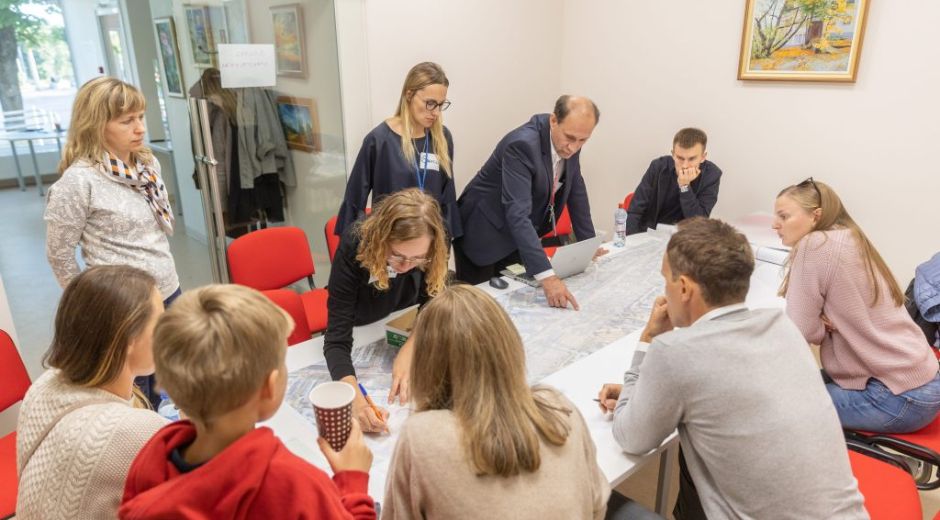
Local conversations allow citizens to exchange concerns, suggest improvements, learn from one another, and recognize shared goals. These conversations do not need to be formal meetings. They can take place during morning walks, at outdoor seating, in front of schools, or while volunteering at a community event.

Dialogue rebuilds Trust because it allows citizens to see one another as participants in the same story rather than as opponents in a political conflict.

To understand how local issues are reported and discussed on a global scale, you may follow reliable journalism updates at:
https://www.bbc.com/news

This reinforces awareness that local communities are part of broader democratic patterns.

Reducing Digital Polarization

While digital communication has contributed greatly to accessibility of information, it has also amplified misunderstanding. Without physical presence, people often speak more aggressively or defensively. Algorithms can isolate individuals into ideological spheres. In these environments, Trust often declines.

Shared public spaces counterbalance this effect. They allow:

  • Slower conversation

  • Nuanced communication

  • Observation before judgment

  • Recognition of shared humanity

In person, conversations are less about winning and more about relating.

Even lifestyle conversations, such as discussions about food, culture, tradition, and daily life, can reduce tension and create ease. Cultural storytelling, including topics like culinary heritage, hospitality, and family rituals, can be explored in lighter editorial contexts such as:
https://tasteflavorbook.com/

These subjects remind us that people share more than they disagree on.

Small Actions That Rebuild Trust Locally

Communities do not need large budgets to create meaningful civic impact. Small actions accumulate.

Examples include:

  1. Community clean-up days.

  2. Neighborhood gardening groups.

  3. Shared cooking events or seasonal markets.

  4. Reading circles in local libraries.

  5. Outdoor film nights.

  6. Benches and rest areas designed for conversation rather than passing through.

  7. Youth volunteering teams.

Each of these activities builds micro-experiences of Trust. They show that people contribute not because they are required to, but because they value the community.

The Emotional Dimension of Civic Engagement

Restoring Trust is not only structural. It is emotional. Citizens need to feel that participation is safe and meaningful. If participation feels performative, judgmental, or insincere, it does not create Trust.

People are more likely to participate when:

  • They are invited, not forced.

  • Their perspectives are acknowledged.

  • Their contributions are visible.

  • They experience kindness in interactions.

Emotional safety is foundational to civic participation. Public spaces that feel warm and open make participation easier.

Youth Participation and Future Trust Building

Young people are especially important in rebuilding Trust. Their experiences shape the future character of civic life. When young people are encouraged to participate in community events, public conversations, and shared decision-making, they learn early that society includes their voice.

Schools, youth organizations, sports groups, and cultural centers all play a role. Spaces that allow youth to gather safely, creatively, and collaboratively ensure that the next generation does not inherit mistrust or apathy.

Investment in youth spaces is investment in the future of democracy.

Conclusion: Trust Grows Where People Meet

To rebuild Trust, citizens must encounter one another directly. They must share space, time, voice, effort, and listening. Public spaces create the stage for this interaction. Dialogue gives it meaning. Community activity makes it real.

The rebuilding of Trust does not begin in government chambers or digital forums. It begins in parks, open squares, sidewalks, gardens, and local halls where people meet as neighbors.

Strong civic life is not a theory.
It is a way of living together.

The Pulse of Movies

Scroll to Top
Receive the latest news

Subscribe To Our Weekly Newsletter

Get notified about new articles