Urban Sustainability Policy

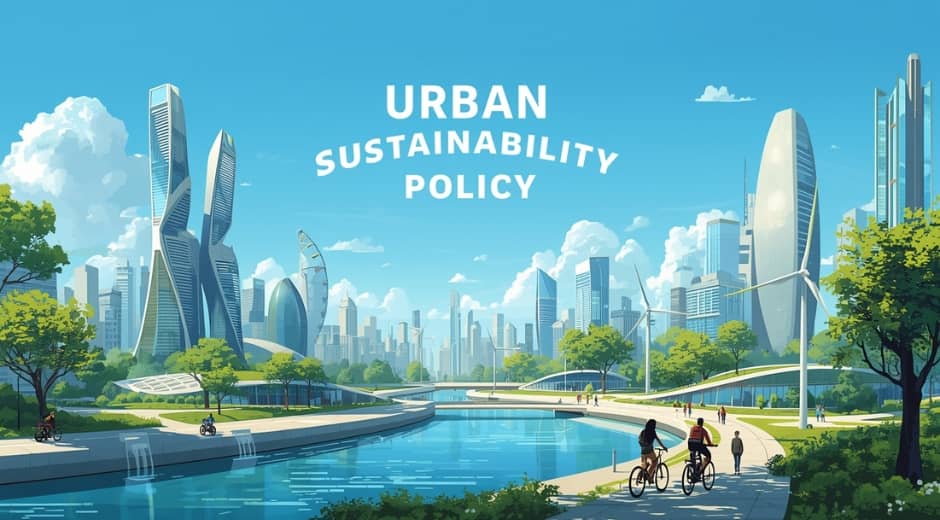
Urban Sustainability Policy: Building Greener and Smarter Cities for the Future

Urban Sustainability Policy: Building Greener and Smarter Cities for the Future

As cities continue to expand, the world faces a defining question: how can urban development meet the needs of today without compromising the future? The answer lies in the growing field of Urban Sustainability Policy, a framework designed to align city planning, environmental protection, and economic growth into a cohesive vision of long-term resilience.

Modern urban centers consume over 70% of global energy and produce more than two-thirds of carbon emissions. Yet they also drive innovation, culture, and opportunity. The paradox of progress is that the same systems that elevate quality of life can also endanger the planet. Urban sustainability policies seek to resolve this paradox by reimagining how cities grow, function, and interact with nature.

The Core of Sustainable Urban Policy

At its foundation, an Urban Sustainability Policy integrates three dimensions: environmental health, economic vitality, and social equity. The goal is to create livable environments that balance growth with conservation. This means investing in green infrastructure, renewable energy, and efficient transportation while ensuring housing affordability and access to public services.

For policymakers, the challenge is not only technical but political. Sustainable urban transitions require cooperation across sectors — government, private industry, and civil society. Successful policies treat sustainability as a shared responsibility, not a bureaucratic checklist.

Green Infrastructure and Resilient Design

Urban resilience begins with infrastructure. Green roofs, permeable pavements, and restored waterways reduce flooding and lower temperatures in dense cities. Public parks and tree corridors improve air quality and mental health, proving that ecological design benefits both the planet and its people.

Transportation is equally crucial. Prioritizing public transit, cycling, and pedestrian pathways lowers emissions while improving connectivity. Smart mobility systems powered by digital data can reduce congestion and optimize routes, turning traffic into a solvable problem rather than an inevitable one.

Governance and Policy Integration

The success of sustainability initiatives depends on governance — how decisions are made and who participates. Traditional top-down approaches are giving way to collaborative governance models where local communities co-create solutions. Citizens’ assemblies, neighborhood councils, and participatory budgeting allow residents to shape the future of their cities directly.

Regulatory tools also play a vital role. Zoning laws that favor mixed-use development reduce commuting distances, while incentives for green building certifications encourage developers to adopt eco-friendly practices. Fiscal mechanisms, such as congestion pricing and carbon taxes, can redirect urban economies toward sustainability.

Technology and the Smart City Movement

Technological innovation enhances sustainability when applied thoughtfully. Smart city platforms collect real-time data on energy consumption, waste management, and air quality. This data-driven insight helps governments respond quickly to challenges and allocate resources efficiently.

However, technology is not a cure-all. Without transparent governance and citizen oversight, data-driven systems risk becoming tools of surveillance or inequality. Ethical digital governance must accompany smart infrastructure to ensure inclusivity and accountability.

Social Inclusion and Affordable Urban Living

A sustainable city must also be a fair one. Green transitions often risk displacing vulnerable communities through rising costs and gentrification. To prevent this, policies must link environmental goals with social protection. Affordable housing, access to clean water, and equitable transportation networks are essential pillars of inclusive sustainability.

Urban sustainability must prioritize people, not just infrastructure. Policies that fail to address inequality cannot be considered truly sustainable.

Global Examples and Local Adaptation

From Copenhagen’s cycling culture to Singapore’s vertical gardens, successful cities demonstrate that innovation adapts best when rooted in local identity. What works for one city may not work for another — climate, economy, and culture all shape implementation.

In developing nations, sustainability often intersects with poverty reduction and informal housing reform. In wealthier countries, the challenge is retrofitting outdated infrastructure for efficiency. Context defines strategy, but the principle remains universal: progress must harmonize with the planet.

The Role of Civic and Media Institutions

Civic engagement and information transparency are vital to urban transformation. Public understanding fosters accountability, while responsible media drives awareness. Independent platforms like Politicxy have highlighted how citizen participation strengthens long-term urban governance by ensuring that sustainability remains a public priority.

Meanwhile, policy analysis from respected outlets such as Politico helps contextualize global success stories and policy failures, connecting local leaders to international best practices. And through storytelling, platforms like Moviefil explore the human experience behind sustainable cities — from documentaries on green architecture to narratives about communities reinventing their urban landscapes.

Challenges Ahead

Despite progress, many barriers remain. Political short-termism often undermines sustainability efforts, as election cycles rarely align with environmental timelines. Funding gaps, bureaucratic inertia, and competing interests can delay implementation. Furthermore, climate migration, extreme weather, and rising costs of living put additional pressure on cities to adapt faster than ever before.

The next generation of Urban Sustainability Policy must move beyond declarations and embrace measurable, enforceable action. Data transparency, public accountability, and cross-border collaboration are essential to ensure that sustainability is not merely a slogan but a governing reality.

Conclusion

The future of urban life depends on how effectively cities integrate sustainability into their DNA. Urban Sustainability Policy is no longer optional — it is the blueprint for survival in a century defined by climate urgency and population growth.

Through the combined influence of civic platforms like Politicxy, analytical journalism such as Politico, and cultural storytelling from Moviefil, the global conversation around sustainability continues to expand beyond politics and into everyday life. Cities that embrace this transformation will not only endure but thrive — proving that progress and preservation can coexist when guided by vision, inclusion, and integrity.

The Pulse of Movies

Scroll to Top
Receive the latest news

Subscribe To Our Weekly Newsletter

Get notified about new articles