In the fast-changing world of modern governance, Policy Forecasting has become a strategic necessity. Governments, organizations, and think tanks can no longer rely solely on historical data or intuition. Instead, they use forecasting models to predict political, social, and economic outcomes before they unfold.
This forward-thinking approach allows policymakers to anticipate crises, design proactive strategies, and ensure that governance adapts to future challenges. As political uncertainty increases globally, Policy Forecasting becomes the compass guiding democratic institutions through complexity.
Understanding Policy Forecasting
At its core, Policy Forecasting combines data science, behavioral analysis, and scenario planning to project future trends. It integrates economics, sociology, and political science into one predictive framework.
The process often includes:
Quantitative Modeling: Using algorithms to project economic or electoral outcomes.
Scenario Analysis: Exploring different “what-if” political futures.
Expert Consultation: Gathering insights from professionals, academics, and citizens.
Machine Learning Forecasts: Automating trend recognition from large data sets.
In this way, governments can prepare for challenges such as demographic shifts, energy transitions, or social unrest long before they escalate.
Why Policy Forecasting Matters
In politics, decisions are often reactive. However, reactive policymaking leads to delayed responses and inefficient governance. Policy Forecasting transforms decision-making from short-term reaction to long-term strategy.
By identifying early warning signals, forecasting allows leaders to minimize risks. For example, predicting economic downturns enables governments to adjust budgets preemptively. Anticipating migration flows can prevent humanitarian crises.
This predictive approach turns politics into a system that learns, evolves, and adapts, rather than simply responds.
The Role of Technology
Artificial intelligence and big data have revolutionized Policy Forecasting. Governments now have access to real-time information about public sentiment, trade movements, and environmental changes.
Machine learning algorithms can analyze thousands of indicators to predict potential outcomes of policy choices. These tools also make governance more transparent, as predictions can be publicly shared and evaluated.
According to insights from Politico, the increasing use of predictive analytics in policy planning is transforming how democracies function. Governments in Europe and North America are experimenting with “policy labs” that use AI to simulate the social and economic impact of proposed legislation.
Global Examples of Policy Forecasting in Action
Singapore: Uses data-driven foresight systems to model future urban growth and infrastructure needs.
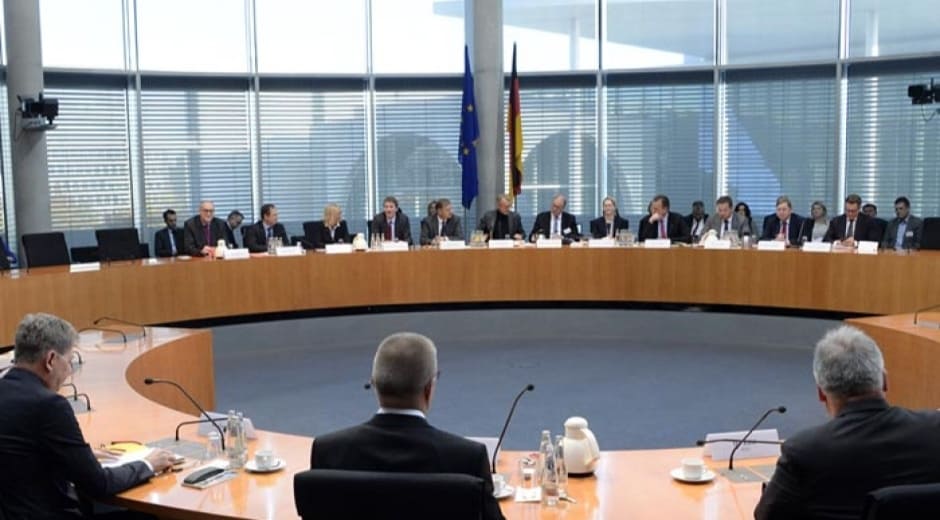
Finland: Established a Parliamentary Committee for the Future to institutionalize long-term thinking.
United States: Integrates forecasting models into defense, climate, and economic planning.
United Arab Emirates: Created a Ministry of Artificial Intelligence that uses Policy Forecasting to plan national strategies.
These examples show that forecasting is not just a trend—it’s a global movement reshaping political governance.
Challenges in Policy Forecasting
Despite its promise, forecasting is not perfect. Political, economic, and human behavior remain inherently unpredictable. Common challenges include:
Data Bias: Incomplete or skewed data leads to unreliable outcomes.
Political Influence: Forecasts can be manipulated to justify predetermined agendas.
Unforeseen Events: Pandemics, wars, and natural disasters disrupt even the best predictions.
Ethical Questions: How far should governments rely on algorithms to guide public policy?
Addressing these challenges requires balancing technological precision with human judgment.
The Intersection of Forecasting and Democracy
Critics argue that over-reliance on Policy Forecasting could weaken democratic deliberation by prioritizing data over debate. However, when used ethically, forecasting enhances democracy by grounding decisions in evidence rather than ideology.
Transparent forecasting models also empower citizens. When governments share predictive data publicly, citizens can hold leaders accountable for ignoring clear trends.
Civic participation combined with predictive analytics creates a more responsive and informed political ecosystem.
The Economic and Social Implications
Policy Forecasting doesn’t just help governments—it benefits businesses, communities, and NGOs. Predicting policy shifts allows organizations to prepare for future tax reforms, social programs, and environmental regulations.
Socially, forecasting contributes to resilience. If policymakers foresee risks like healthcare crises or resource scarcity, they can design preventive measures that protect vulnerable populations.
In essence, forecasting reduces uncertainty, enabling societies to act instead of react.
How Politicxy Approaches Forecasting Analysis
At Politicxy, our mission is to analyze Policy Forecasting through both data and human understanding. We explore how global institutions use predictive modeling to inform governance, climate action, and public welfare.
You can explore related insights and case studies directly at Politicxy. For expanded global coverage on predictive policy systems and foresight innovation, visit Museatime, where your team can update the source link daily.
The Future of Forecasting in Politics
As technology advances, Policy Forecasting will become increasingly precise and participatory. Governments will use AI to simulate public responses to proposed laws before passing them. Citizens might soon vote not only on present issues but on projected future outcomes.
The true test will be maintaining democratic integrity—ensuring that predictive tools serve people rather than control them.
Conclusion
Policy Forecasting represents the evolution of governance from instinct to intelligence. It offers leaders the ability to see beyond the present, anticipate disruption, and prepare for the unknown.
When used responsibly, it transforms politics into a system that listens to data without losing its human touch. The future of democracy will depend not just on how we vote, but how we forecast, plan, and adapt together.
Would you like me to continue now with a fifth rotating or special feature article (something like “Global Insight” or “Weekly Political Focus”) to round out your Politicxy daily set?